Showing posts with label church in the Philippines. Show all posts

Tuesday, June 8, 2010

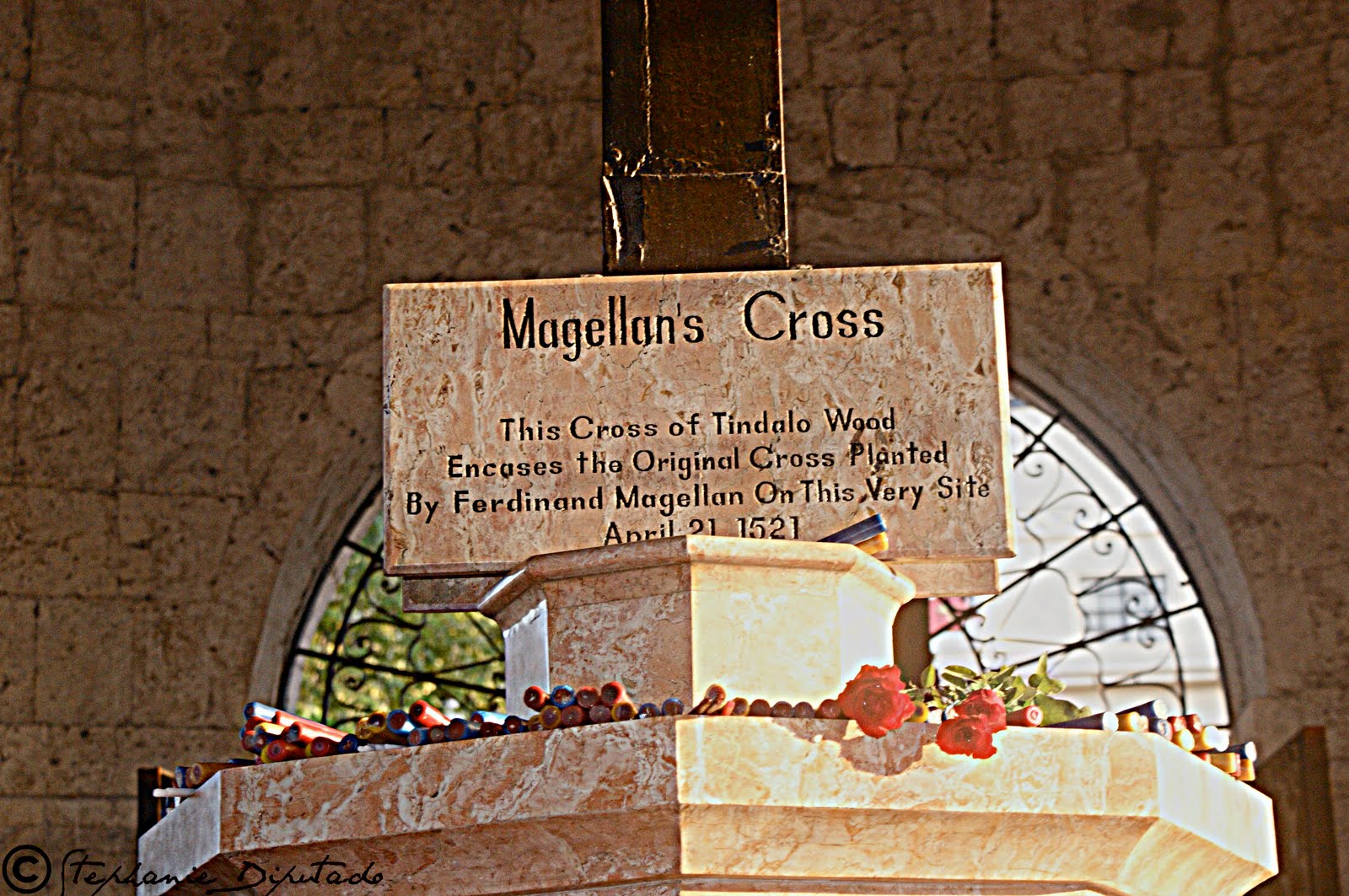
Magellan's Cross, Symbol of Christianity in Cebu

Magellan's cross is certainly a tourist attraction in Cebu. It is housed in a small chapel (?) a few meters away from the Basilica del Sto. Nino. We went there on a Sunday (06 June 2010), so go imagine how crowded it was. 


Magellan's cross

Tindalo wood (afzelia rhomboidea)


Monday, April 12, 2010

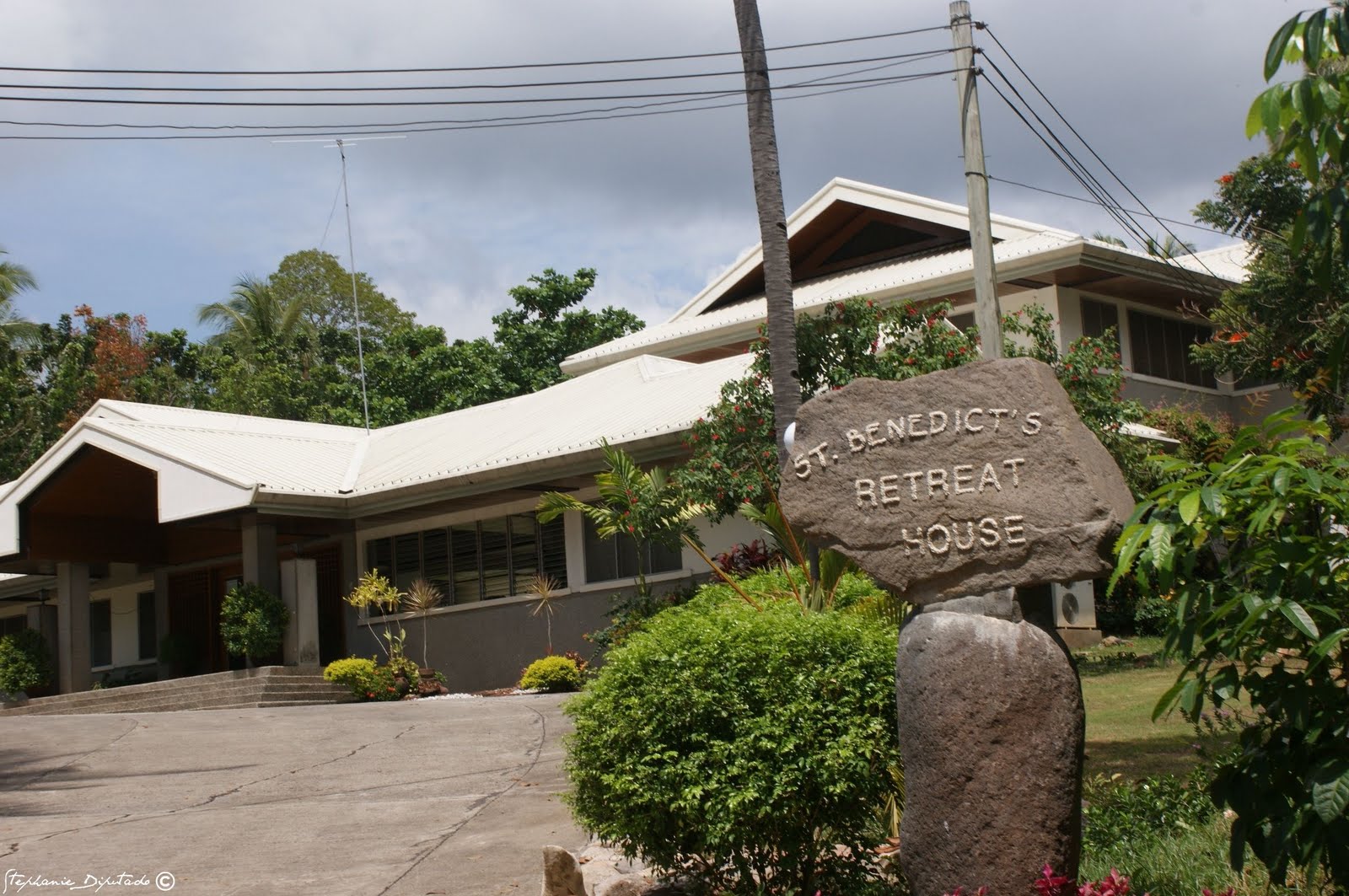
Benedictine Retreat House, Digos City, Davao del Sur

When we were in Davao, we went to Kiagot where most of our relatives are. Reunion, yes. ;)
Before waiting for people to arrive, we decided to go to Benedictine. Ayaw naman namin masunog at mangitim lang habang naghihintay, kailangan kahit papano may mapala.

I was informed that my Lolo (actually not really my Lolo. Brother of my maternal Lolo, that is) was the former caretaker of the Benedictine farm in Digos City, Davao del Sur. When the monastery was built in the year 1981, a portion of the vast land was given to my Lolo. Kaya pala anlapit lang ng residences ng mga Tito&Titas ko dun. :D

So there. We went there.......and I fell in love with the place.

Here are the pictures:

Front

Inside. Check out the hanging light fixtures.

Inside. Very simple.

Inside. Very few statues, I must say. They're keeping it simple I guess.

Outside. Beautiful landscape.
                                                                         
Outside.

Outside. Parking Area.


I'm inlove. :D

Wednesday, November 25, 2009

Miagao Church, Iloilo


Miagao Church
[photo taken April 2009]

Constructed more than two hundred years ago in the year 1797, the Miagao Church stands as a living legacy of the culture and way of life of the people of Miagao centuries ago, anchored in a strong foundation of Christian faith. As most travelers would agree, the Miagao Church is one of the country’s architectural gems because of its unique and imposing designs, ornaments and motifs.

The artistic facade of the Miagao Church is decorated with a relief sculpture of St. Christopher carrying the Christ child amidst coconut, papaya and guava shrubs. Like any other foreign influences, the architecture of many colonial churches has undergone the process of indigenization. This process is carried out by incorporating the prevailing Hispano-American and Medieval Spanish architecture with local as well as Muslim and Chinese touches. Thus, the synthesized topology which is anachronistic with the unmindful sues of decorative elements. It had no distinction in terms of periods or orders. A truly ‘Philippine Church’, it exudes a native touch.

A large stone image of St. Thomas of Villanueva, parish patron saint, dominates the center. Carved life-size statues of the Pope and St. Henry with their coat-of-arms above them flank the main entrance. Supporting the facade are the twin belfries, one towering two-storeys and the other three-storeys high. The church’s simple interior is nevertheless highlighted by a striking gold-plated retablo.

In Baroque-Romanesque style, the church sinks six (6) meters deep into the ground with walls one-and-a-half (1 1/2) meters thick and buttresses thrice thicker.

The creative and aesthetic abilities of Spanish colonizers are reflected in many colonial churches in the Philippines. This is especially true in Miagao Church – a world-renowned religious structure now included in the UNESCO World Heritage List.

The Miagao Church can be accesed via jeepneys plying the Southern Iloilo (Miagao or San Joaquin) route.

Friday, November 20, 2009

San Miguel Archangel Parish, Samboan, Cebu

San Miguel Archangel Parish in Samboan, Cebu
[photo taken March, 2009]

Read more about this church here.

Buried statue in Samboan, Cebu

St. Joseph statue buried in Samboan, Cebu
[Photo taken March 2009]

You can read more about the buried statue here.


Oslob Church

Oslob Church
[photo taken November 2009]

Located 117 kilometers southeast of Cebu City is the town of Oslob. First mentioned in 1690, it was only a visita of Boljoon. Founded by the Augustinians, it was turned over to the Jesuits in the year 1737 but was returned to them in 1742. The original fortified Spanish settlement was located in what was then called Bolocboloc but now known as Daanlungsod, (in Cebuano, means, old town). It’s high walls and watchtowers are still standing today minus the original chapel.

The current church, located a few kilometers from the fortified settlement in what was then known as Catarman (or Katadman) in the present Poblacion (town center) might not have been possible if not for one very decisive event: the victory of Fr. Julian Bermejo, parish priest of Boljoon, and the townspeople of Oslob against the Moro slave raiders led by Sultan Goranding in the year 1813. Near the waters off Sumilon Is., the soldier priest’s fleet of local defenders aided by his string of watchtowers successfully repelled and captured the leader. Since then, these places were now peaceful and threats of further raids diminished.

Drawn from the plans of Bishop Santos Gomez Marañon, the cornerstone was laid by Fr. Julian Bermejo on 4 May 1830. The coral stone used for the walls and belfry were quarried from the seas, cut, polished and placed one on top of the other and cemented with lime from the ashes of seashells. Wood was sourced out from other places and islands while the church roof was made of tejas sourced out and baked locally from a place now known as Lulukhan. Construction of the church was not only done by the people of Oslob but townspeople from neighboring Tañon (now Santander) and Ivisan (now Nueva Caceres, Oslob) helped in building too. Because the town was not really rich and relied on voluntary labor, it was finished 18 years later in 1848.

During the time of Fray de Santiago, the belfry was damaged by a typhoon. In 1932, the tejas roof was replace with galvanized iron sheets. In 1954, the wooden flooring of the church was replaced with baldozas.

On 7 November 1955, a fire of unknown cause gutted the church and in three hours, burned everything inside except for the icon of the Immaculate Conception. The people were devastated. They decided to rebuild the church and various fund raising activities were done. One of these, the Oslob Church Reconstruction Movement Caroling Team made the rounds during Christmas. Oslobanons living or working abroad also channeled funds for the church. Up until the 80’s there were several restoration works done on the church and the kumbento.

There seems to be a confusion on the fires that happened before this year’s unfortunate event. Two sources: Galende in Angels in Stone wrote that the church building was totally burned by guerillas in 1942 and was gutted by fire of unknown origin in 1955. He also mentions that the vault and dome later fell after the first fire. By the way, the Cebu Daily News article in the preceeding post takes this line. Allego, in his memorare, only mentions the 1955 fire as the 2nd cataclysm that befell the church. The first being a strong typhoon damaging the belfry during the time of Fray Gregorio de Santiago (1892-1898). I tend to go with the latter author.

On 26 March 08, an 8 hour fire gutted the more than a century old kumbento (parish house) and church of Oslob in Cebu. 

Source: Simbahan.net